

Seismic-Resilient Home Construction
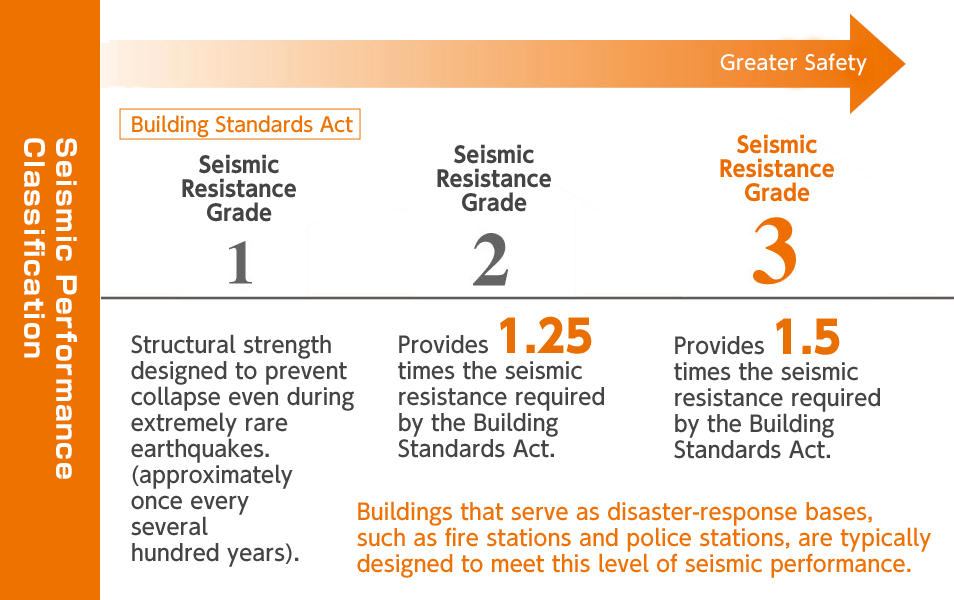
KAⅡ constructs homes that achieve Seismic Resistance Grade 3 or higher, requiring approximately 1.5 times the structural strength specified by Japan’s Building Standards Act. By integrating advanced vibration-control technology, we further enhance seismic performance, delivering a highly resilient residential structure designed to reliably protect families during major earthquakes.
High Seismic Performance as a Standard Specification
KAⅡ builds homes that meet Seismic Resistance Grade 3, the highest classification under Japan’s Housing Performance Indication System. Once the floor plan is finalized, structural calculations are performed individually for each building, ensuring that every structure meets the highest seismic standards. This engineering approach provides exceptional structural stability against major seismic events, safeguarding both the home and the lives of its residents.
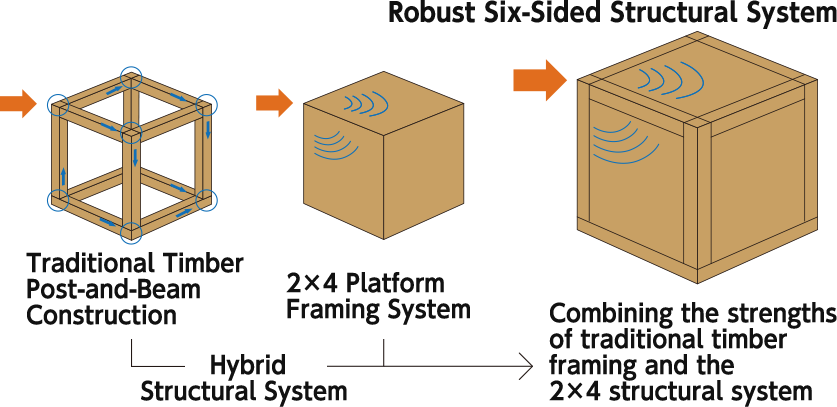
KAⅡ’s Robust “Six-Sided Structural System”
While conventional post-and-beam construction primarily supports buildings through structural “points” and “lines” such as columns and beams, KAⅡ enhances the traditional wooden frame system by incorporating structural sheathing panels derived from the 2×4 construction method. This hybrid system
forms a rigid six-sided structural enclosure supported by floors and walls, providing excellent resistance against compressive forces, lateral loads, and torsional deformation.
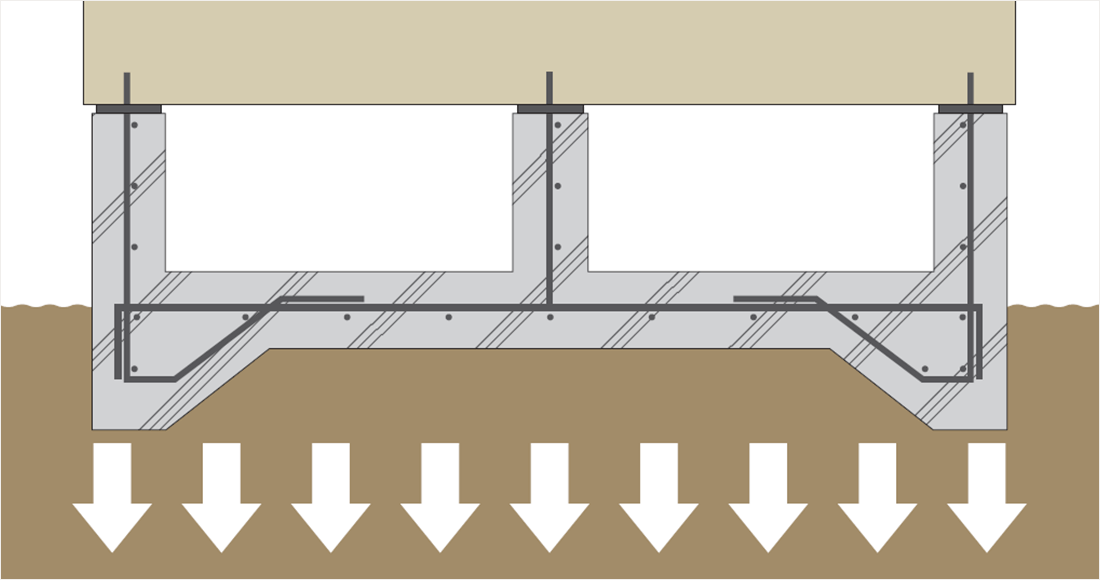
Structural Surface Load Distribution
Standard Adoption of a Reinforced Concrete Raft Foundation
A raft foundation (mat foundation) consists of a reinforced concrete slab covering the entire base of the building. By distributing structural loads across a continuous surface rather than isolated points, this foundation system provides significantly greater seismic stability compared to strip foundations.
Because raft foundations e ectively disperse structural loads and seismic forces, their adoption expanded significantly after the Great Hanshin-Awaji Earthquake, and they are now widely used in modern residential construction.
Additionally, covering the ground with reinforced concrete helps prevent soil moisture intrusion while also creating a barrier that reduces the risk of termite and pest infiltration.
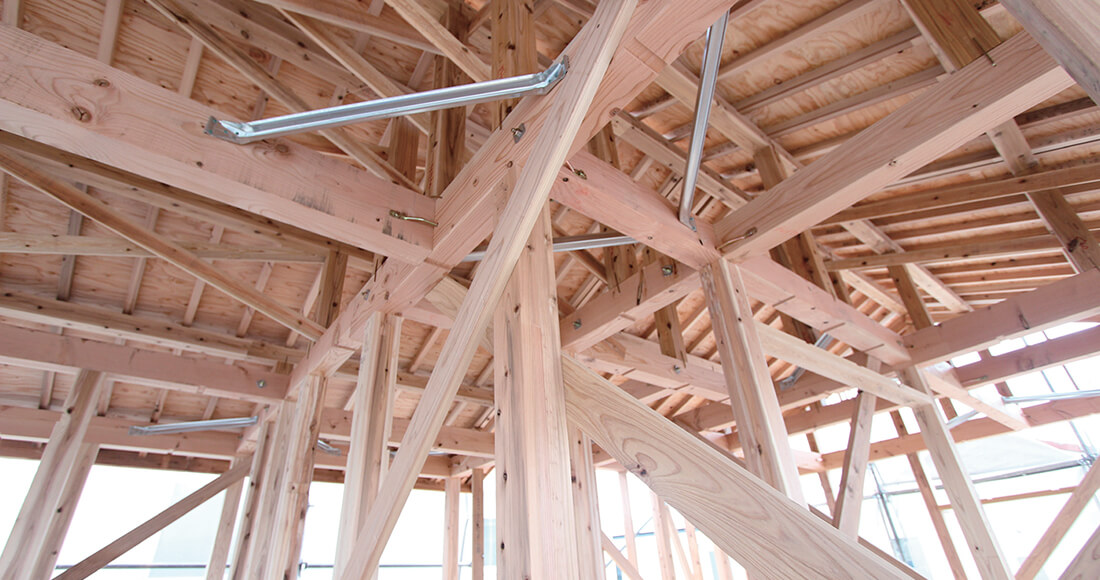
Seismic Reinforcement Connectors
Seismic-rated connectors fastened with screws and bolts are installed at key structural joints.
These components integrate the entire structural frame, reinforcing the building against seismic forces and typhoon-level wind loads, thereby protecting the structural integrity of the home.
Vibration-Control System for Timber Structures
Optional Specification
To achieve truly resilient homes, KAⅡ o ers the TRC Damper, a vibration-control system engineered to absorb seismic energy.
This system utilizes dampers containing special viscoelastic rubber, which expand and contract to absorb seismic energy. The TRC Damper can be incorporated into a wall-based structural system, further improving seismic energy dissipation.
The viscoelastic rubber integrated into the dampers is developed using advanced rubber compounding technology from Sumitomo Riko, the global leader in automotive vibration-control rubber. This technology e ectively reduces seismic motion transmitted to the structure.
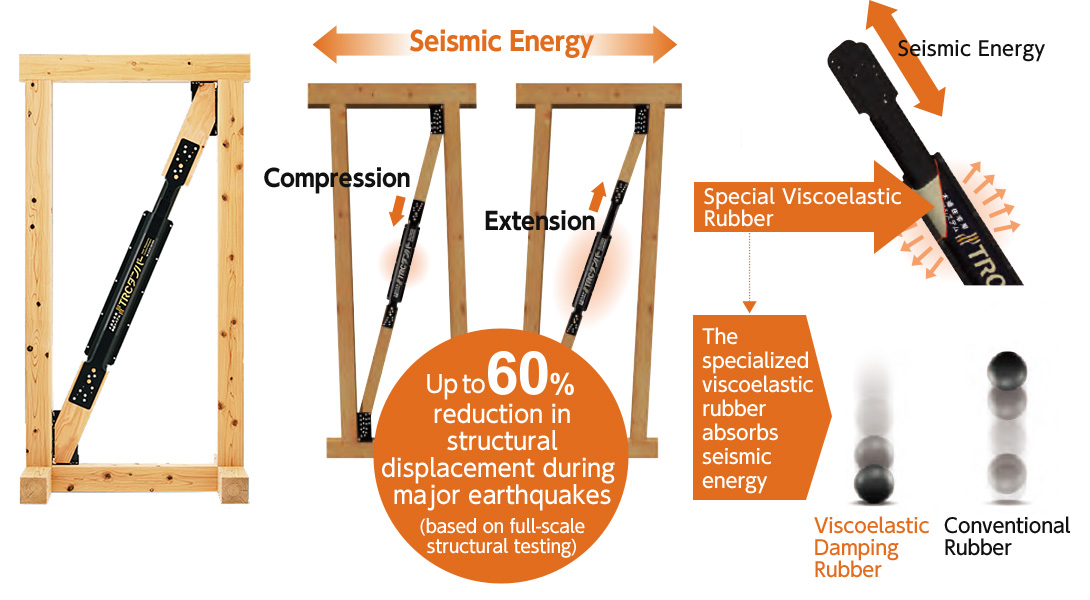
Seismic Resistance × Vibration Control for Comprehensive Structural Protection
Even highly earthquake-resistant structures may gradually lose strength when subjected to strong seismic forces and repeated aftershocks. This led to the development of vibration-control construction methods, which absorb seismic energy. Initially applied to large-scale structures such as high-rise buildings and condominiums, this technology has recently proven highly e ective for detached
residential buildings as well.
Seismic Resistance
Resist Seismic Motion
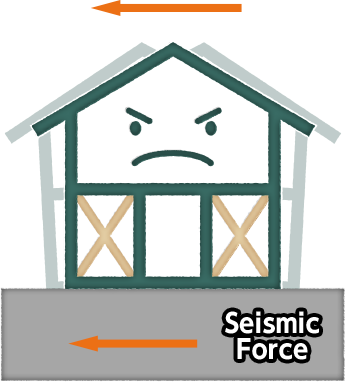
Strengthening the structure to resist seismic forces.
Seismic-resistant structures are designed to counter earthquake forces through structural rigidity.
However, when seismic forces exceed the structural capacity, internal components may sustain damage, potentially weakening the overall structure.
Vibration Control
Absorb Seismic Motion
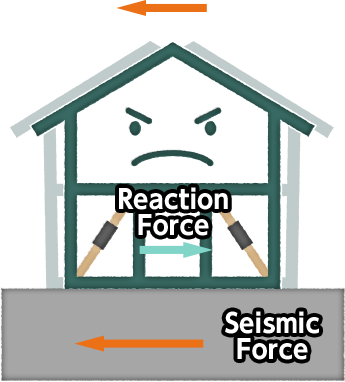
Absorption of seismic energy.
By utilizing vibration-control materials, seismic energy is absorbed before it damages the structure. This technology is e ective even during repeated seismic events, helping maintain the long-term structural performance of the building.